Designing Oils & Lubricants Packaging: The Challenge of Multilingual Packaging Artwork
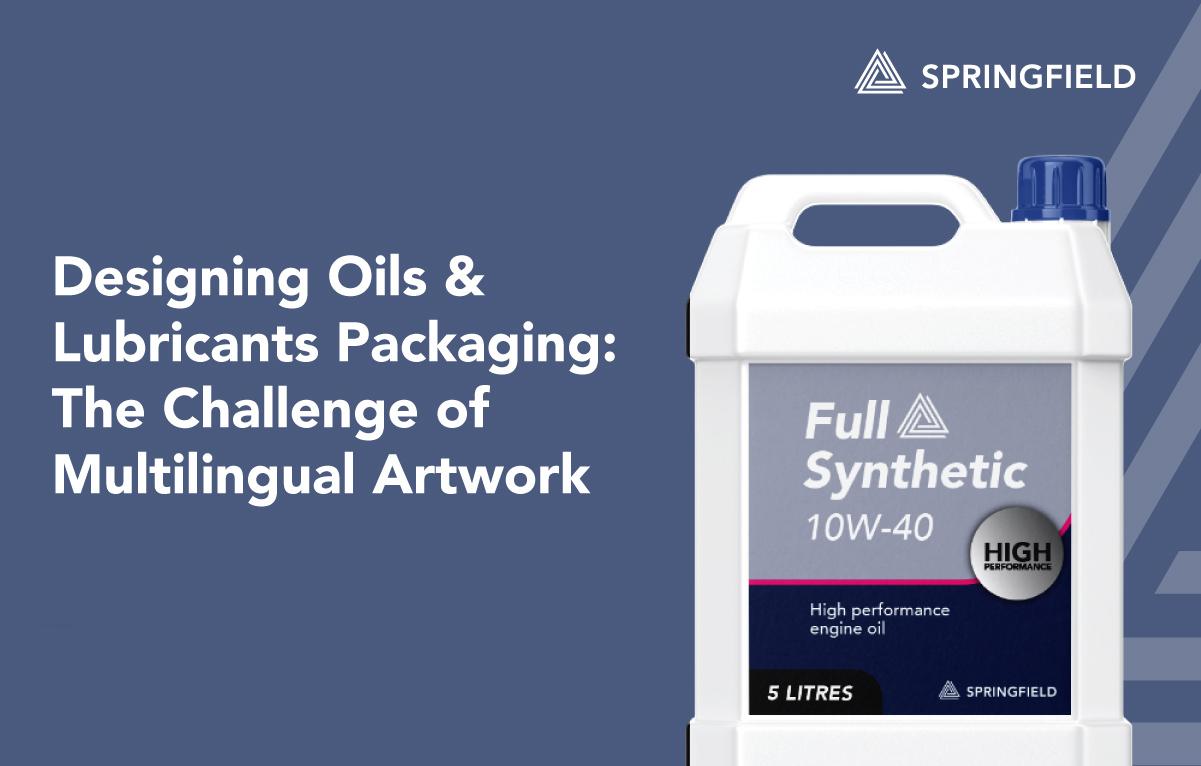
Launching an oils & lubricants product into new international markets involves more than translating the information on its packaging.
As brands expand across regions, oils & lubricants packaging needs to accommodate different languages, regulatory requirements and product specifications, often within the same label or packaging format.
For industrial and automotive brands managing extensive product portfolios, and in turn, managing multilingual packaging artworks, can quickly become a complex challenge.
Why Is Multilingual Packaging Artwork So Challenging for Global Oils & Lubricants Brands?
For oils and lubricants brands operating across international markets, packaging needs to communicate a significant amount of technical information – in multiple languages.
Product specifications, viscosity grades, usage instructions, safety warnings and regulatory details all need to not only be presented clearly, but in an accessible way to customers across the globe.
Therefore, adding multiple languages increases the amount of copy, affects text hierarchy and reduces the space available.
At the same time brand guidelines must be followed across every version, and your packaging design should look good too!
Getting this balance right requires careful packaging design planning, technical artwork expertise and a controlled approach to global packaging management.
Translation is Only the Beginning: How to Adapt Artwork for Multiple Languages
Multilingual packaging artwork is a challenge that goes far beyond translation.
A direct translation rarely fits onto packaging artwork without further adjustment. Different languages can vary considerably in length and grammatical structure, meaning translated copy may take up more space and affect the original design’s layout, hierarchy and readability.
This is particularly challenging on smaller labels, narrow bottles, cartridges and technical containers, where available space is limited. Simply reducing font sizes to accommodate additional text can compromise legibility, while overcrowded layouts can make important product information harder to navigate.
Effective multilingual artwork adaptation requires careful consideration of text length, terminology, line breaks, spacing and information hierarchy.
Planning flexible text areas and clear layout rules from the outset helps accommodate different languages without losing the original design’s visual identity.
Working with language specialists alongside experienced packaging artwork teams also helps ensure translations are accurate, appropriate for the intended market and presented clearly within the available space.
How to Maintain Readability and Information Hierarchy Across Multilingual Packaging Artwork
Once translated content has been adapted to fit the packaging, the next challenge is making sure the information remains clear and easy to navigate. For oils and lubricants products, this is particularly important as packaging often carries a combination of product details, technical specifications, usage instructions and safety information.
A clear information hierarchy helps users identify the most important details quickly. Product names, viscosity grades, performance specifications and essential warnings should remain prominent, with supporting information organised logically around them.
Typography, spacing and panel layouts all play an important role. Consistent font styles, appropriate sizing and clearly separated information panels can make multilingual labels easier to follow, while symbols and recognised visual cues can help users identify key information across language barriers.
Brands should also consider how information is positioned across different language versions. A layout that works well in one language may need adjustments in another. But the overall structure and visual identity should remain consistent wherever possible.
By establishing clear design guidelines for typography, hierarchy and information placement, brands can ensure multilingual packaging remains legible, professional and recognisable across international markets. All without sacrificing the quality of the original design.
How to Manage Regulatory Requirements Across International Markets
Regulatory information can vary significantly between Global markets Particularly for oils, lubricants and chemical products.
Hazard classifications, safety warnings, product identifiers, technical specifications and language requirements all need to be considered when preparing packaging for different regions. A label suitable for one market may therefore require additional or amended information before it can be used elsewhere.
These differences need to be considered before artwork production begins.
A design that works for one market may require additional warning text, different symbols, revised instructions or market-specific contact information elsewhere. Adding this content late in the process can disrupt the layout, reduce legibility or create avoidable approval delays.
A practical approach is to work closely with regulatory and compliance teams. Confirming the relevant requirements, including hazard and safety information, local language provisions and any market-specific product details. This information should be clearly documented and provided to artwork teams before adaptation begins.
How to Maintain Global Brand Consistency
Consistency is central to effective international packaging. Customers should be able to recognise a brand and understand its product range wherever they encounter it.
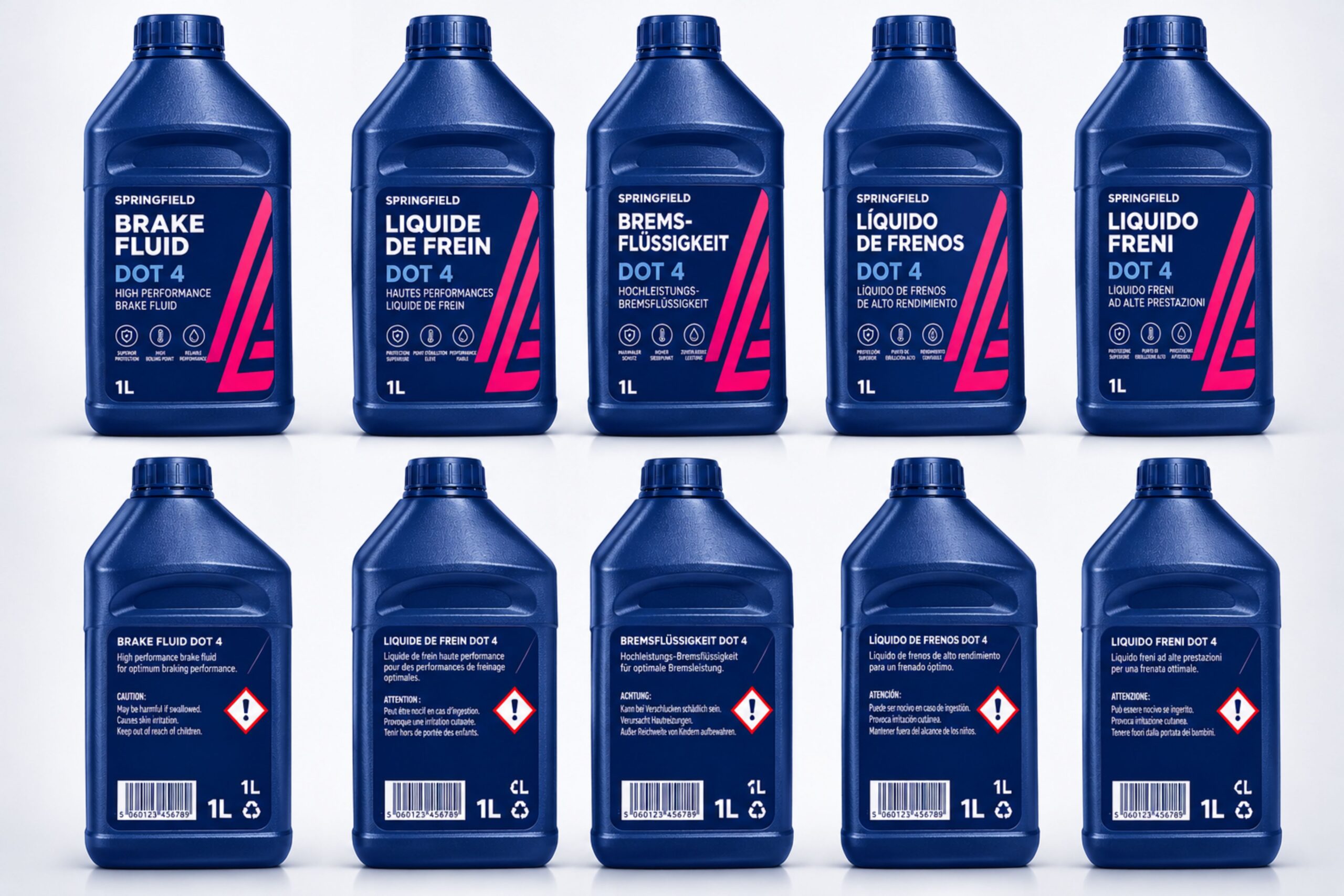
However, consistency does not mean that every artwork file must be identical. It means that each local version should follow an agreed design system.
That system may define the use of:
- Colours
- Logos
- Typography
- Imagery
- Product naming
- Icons
- Information hierarchy
A master artwork provides the controlled foundation for this. While approved local adaptations accommodate language, regulations and pack dimensions.
This balance allows brands to remain recognisable without forcing every market into an unsuitable template.
How Springfield Supports Multilingual Packaging Artwork Across Global Markets
Managing multilingual packaging across international markets requires more than translating copy and updating artwork.
Brands need to adapt layouts, incorporate market-specific information, meet different print specifications and maintain control of multiple approved versions. Springfield brings together the technical expertise and global artwork management capabilities to support each stage.
Springfield helps brands turn approved packaging designs and market-specific content into accurate, production-ready artwork through:
- Technical Artwork Consultancy: Establishing technical requirements for different packaging formats and print processes, including specification checks and dielines.
- Artworking: Adapting layouts to accommodate different languages, product information and market-specific variations while maintaining brand guidelines.
- Reprographics: Preparing and refining artwork to meet print specifications and production requirements.
- Colour Management: To maintain consistent brand colours across different substrates, print technologies and production locations.
- Digital Proofing: Allowing your teams to review layouts, copy and colours before artwork is released for print.
Together, these services support the challenges explored throughout this article. From adapting multilingual layouts and maintaining information hierarchy to preparing artwork for different packaging formats.
Once artwork has been adapted and approved, strong Digital Asset Management (DAM) helps keep everything organised.
At Springfield, we provide a centralised platform for managing packaging assets, online approvals and project progress. Through this, your teams can access the latest approved files, track revisions and coordinate market-specific adaptations, helping reduce duplication and avoid confusion around artwork versions.
International packaging programmes also benefit from coordinated support across the markets and production environments involved.
Through Springfield’s international network, with hubs in the UK, Germany, Italy, Brazil and Chile, brands can combine coordinated project management with local market knowledge. Shared approaches to master artwork, terminology, approvals and production-ready files help maintain consistency. While local expertise supports language, regulatory and format considerations in each market.
For packaging and brand managers, this means having the structure to coordinate complex international rollouts, maintain communication between stakeholders and adapt artwork without losing sight of the wider brand identity.
Partner with Springfield to manage the multilingual packaging challenges of oils and lubricants.