How to Manage Multilingual Agrochemical Packaging for Global Brands
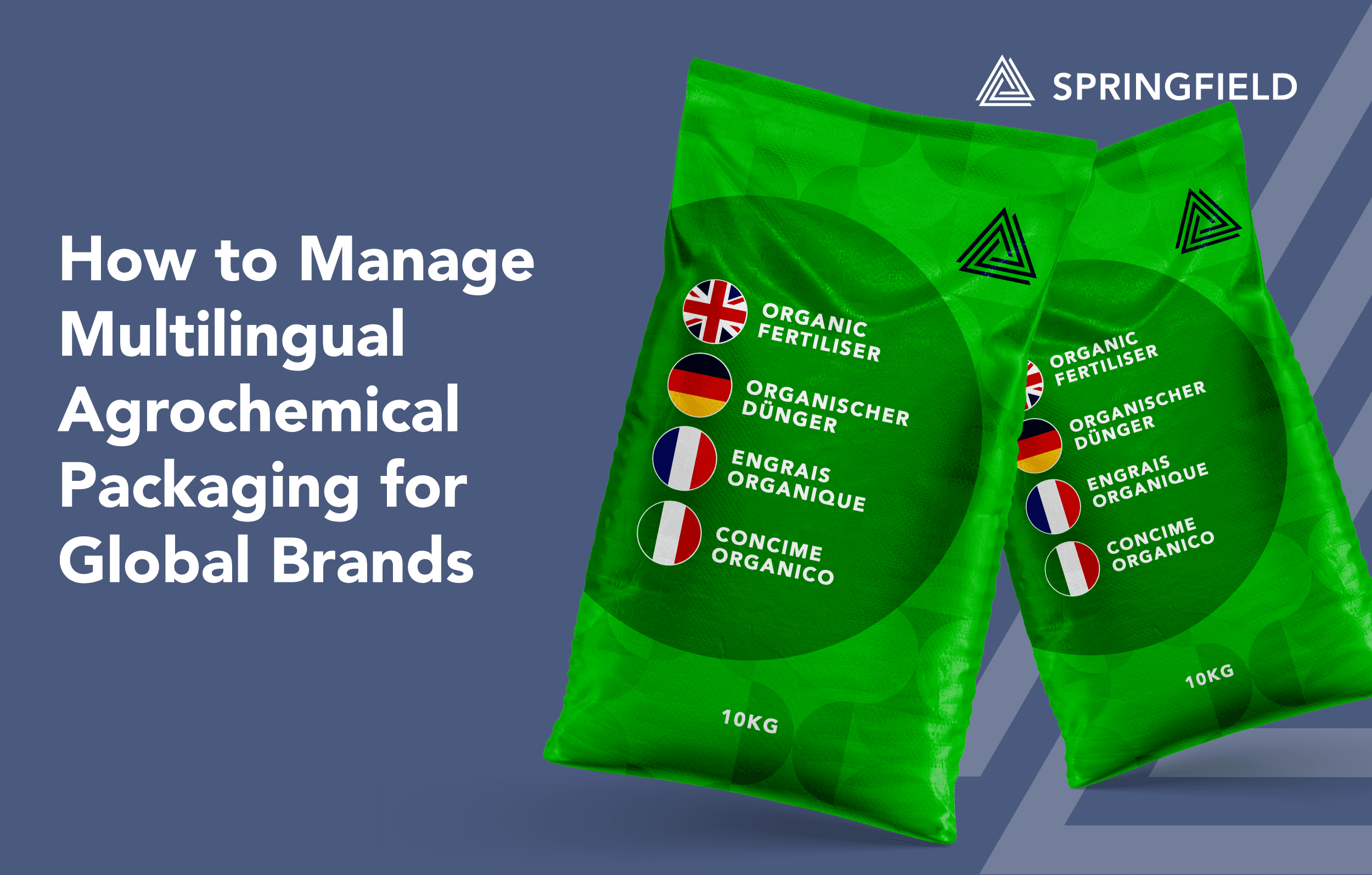
Multilingual packaging management is paramount for brands selling products globally in the agrochemical sector.
A missed translation, outdated warning phrase or incorrect versions can delay a launch, create rework, affect market access or put brand reputation at risk. In some instances, packaging errors can also pose a risk to health and safety.
With the right artwork management process however, multilingual agrochemical packaging can be controlled, consistent and scalable.
Why Multilingual Agrochemical Packaging Management is Complex
For global agrochemical brands, packaging is never just packaging. It is a product identifier, a legal document, a safety guide, a compliance record and a brand touchpoint, all competing for space on the same label.
When products are sold across multiple countries, that challenge becomes even more demanding. Each market may require different languages, hazard statements, application instructions, symbols, pack formats and regulatory wording.
One product can have dozens of artwork versions, each needing to be accurate, approved and ready for print with strict deadlines.
Regulations to Consider in Multilingual Agrochemical Packaging
Agrochemical packaging has to communicate technical, regulatory and safety-critical information clearly. Labels may need to include:
- Authorised uses
- Dosage rates
- Storage instructions
- Personal protective equipment guidance
- Batch details
- Hazard pictograms
- Signal words and precautionary statements.
In many markets, this information must align with classification, labelling and packaging rules for hazardous substances and mixtures, as well as product-specific pesticide or plant protection product requirements.
International guidance also reinforces the importance of good pesticide labelling practice. The Food and Agriculture Organisation and World Health Organisation guidance on pesticide labels focuses on clear label content, design, hazard communication and user understanding.
In Europe, plant protection products must meet both product labelling requirements and CLP obligations. Great Britain adheres to the Health and Safety Executive provide pesticide labelling and packaging guidance covering product labelling, CLP and packaging.
In the United States, the Environmental Protection Agency is introducing phased bilingual pesticide labelling requirements, with Spanish translations required for key safety and health sections across a rolling timetable.
For brand, regulatory and packaging teams, the practical challenge is not simply translating copy. It is managing every local version without losing control of the master artwork, approved claims, mandatory phrases, pack hierarchy, design consistency or print quality.
The Risks of Managing Packaging Versions Manually
Many agrochemical manufacturers still manage multilingual packaging artwork through a mix of email chains, shared folders, spreadsheets and local market feedback.
This can work for a small number of SKUs. However, as product ranges expand across crops, formulations, pack sizes and territories this can get out of hand – quickly.
Some common risks include:
- Version confusion: teams may be unsure which artwork file is current, approved or outdated.
- Translation inconsistency: repeated phrases can be translated differently across markets or product lines.
- Approval delays: regulatory, brand, technical and local-market reviewers may all need to comment, but not always in a structured order.
- Artwork errors: changes to one language panel, hazard statement or pack size can affect layout, legibility and print readiness.
- Loss of audit trail: when feedback sits across inboxes and spreadsheets, it becomes harder to prove what changed, who approved it and when.
In a regulated industry, these are not minor admin problems. They can create compliance risk, slow down speed to market and make it harder for global brands to protect visual consistency across every region.
If these pain points sound familiar, it is time to explore asset management solutions with a trusted partner.
Springfield’s DAM Solution to Manage Packaging Assets Globally
A digital asset management system is central to multilingual packaging control. Springfield’s DAM system, used across our global teams, provides a single place to store, manage and access approved packaging assets.
Instead of searching through disconnected folders, your teams use our DAM system to work from controlled files with clearer visibility of status, ownership and usage.
For agrochemical brands, that means master artwork, translated copy, icons, logos, dielines, cutter guides, pack visuals and final print-ready files can be organised in a way that supports both global consistency and local flexibility.
Teams can identify which assets are approved, which markets they relate to and which versions have been superseded.
This is especially valuable when the same formulation is sold in multiple pack sizes or across several countries with different language combinations.
A central system helps reduce duplication, avoid accidental use of outdated files and support more confident packaging translation management.
How Structured Artwork Management Brings Control
Effective agrochemical artwork management starts with structure. Instead of treating each label as a one-off project, brands need a controlled process that connects brief, copy, translation, artwork, regulatory review, proofing, approval and final production files.
Springfield supports global brands by bringing artwork management, reprographics and packaging asset management together in one streamlined workflow.
This helps teams keep multilingual packaging artwork aligned across markets while reducing the manual effort involved in chasing comments, comparing versions and preparing files for print.
A structured process gives every stakeholder a clear role. Regulatory teams can focus on mandatory content. Local market teams can review language and market requirements whilst brand teams can protect identity and layout. Reprographics specialists can check whether the final artwork will reproduce accurately on the chosen substrate, press and pack format.
The Role of Reprographics and Pre-Press Support
Even when copy and design are approved, multilingual packaging still needs to work in print.
Agrochemical packaging may involve labels, cartons, flexible packaging, drums, bottles, sleeves or other formats, each with its own production considerations. Fine text, hazard pictograms, colour consistency and barcode performance all need careful attention.
Springfield’s reprographics and pre-press support ensure artwork is technically ready before it reaches the printer.
This includes preparing production-ready files, checking colour and separations, reviewing print limitations, managing cutter guides and helping reduce the risk of avoidable press issues.
In multilingual agrochemical packaging, small copy changes can have significant layout consequences. Expert reprographics support adds an important layer of quality control.
Best Practices for Managing Multilingual Agrochemical Packaging
- Start with a controlled master: define the approved source artwork and copy before localisation begins.
- Use approved terminology: maintain glossaries for repeated technical, regulatory and safety phrases.
- Plan for language expansion: allow for longer translations and market-specific additions early in the design process.
- Centralise packaging assets: store approved files, logos, symbols and artwork in a DAM system rather than scattered folders.
- Build clear approval workflows: make sure regulatory, brand, technical and local reviewers know when and how to approve.
- Control every version: record what changed, why it changed and which version is approved for each market.
- Involve reprographics early: check print feasibility before artwork is released to production.
How Springfield Helps Global Brands Simplify the Process
Managing multilingual packaging for agrochemical products does not have to mean managing chaos.
With Springfield’s packaging asset management, reprographics and artworking services, global brands can bring order to complex packaging portfolios.
Springfield’s global teams support brands with the systems, workflows and production expertise needed to manage multilingual packaging artwork more efficiently. From centralised DAM control and structured approvals to expert pre-press preparation, the process is designed to reduce errors, speed up launches and protect compliance across every market.
For agrochemical manufacturers, that means less time spent chasing files and more confidence that every label, pack and market version is accurate, consistent and ready to perform.
By using a structured artwork management process, a central DAM system, robust version control and specialist reprographics support, agrochemical brands can manage multilingual packaging with greater confidence. Springfield helps make that possible. Giving global teams the control they need to launch faster, stay compliant and protect brand integrity in every market.