Tomorrow’s Regulations: A 2027 Packaging Regulation Forecast and How to Prepare Artwork Now
Although it may feel like we’ve just welcomed in 2026, packaging teams are always looking ahead.
Governments worldwide, led by the EU and closely followed by the UK and other major markets, are tightening rules on sustainability, transparency, and consumer safety. The shift is fast, complex, and global, and affects packaging in all markets.
For brands, this poses a critical question: is your artwork ready for the next wave of regulation?
In this blog, we explore the key trends shaping packaging regulation, what changes to expect in eco-labelling, food safety, health claims, and recycling logos, and how to future-proof your artwork today.
The 2027 Packaging Regulation Forecast: What’s Changing?
1. Eco-Labelling Becomes Standardised and Data-Driven
One of the biggest changes is the move toward harmonised, mandatory eco-labelling systems.
Under the EU’s new Packaging and Packaging Waste Regulation (PPWR), which applies from 2026, packaging must include clearer, standardised labels indicating material composition, recyclability, and recycled content.
These labels are not just visual. They’re becoming data-backed claims. Expect:
- Mandatory disclosure of recycled content percentages
- Clear instructions for sorting and disposal
- Potential integration of digital tools (e.g., QR codes linking to lifecycle data)
In the UK, similar recycling labelling reforms are expected shortly after, with a harmonised system anticipated by the late 2020s.
What does this mean for artwork compliance?
Static icons won’t be enough. Artwork must support dynamic, multi-market labelling frameworks. Be prepared with more flexibility and adaptability in your packaging.
2. Food Safety Requirements Tighten at the Packaging Level
Packaging is now treated as an extension of food safety regulation.
The EU is introducing stricter limits on hazardous substances in packaging, including heavy metals and PFAS (forever chemicals), with mandatory documentation and thresholds.
At the same time, regulations will increasingly require:
- Clear traceability of packaging materials
- Proof of compliance for food-contact safety
- Alignment between packaging claims and actual material composition
By 2027, expect artwork to carry more compliance-linked declarations, not just marketing copy.
3. Health and Sustainability Claims Face Scrutiny
Regulators are cracking down on misleading claims, especially around “eco,” “green,” and “sustainable” messaging.
The shift is toward substantiated claims only, supported by verifiable data. This aligns with broader anti-greenwashing efforts across global markets.
For brands, this means:
- Claims must match certified standards
- Vague language (“environmentally friendly”) will be challenged
- Supporting documentation must be audit-ready
Artwork implication: Marketing teams can no longer “push the boundaries” of claims. Legal and regulatory teams will have greater control over pack copy, impacting labelling design and content.
4. Recycling Logos and Instructions Become Mandatory and Harmonised
Recycling is moving from optional guidance to regulated communication.
The EU is mandating clearer labelling to help consumers sort waste correctly, including:
- Standardised icons across member states
- Clear separation instructions
- Indications of compostability vs recyclability
By 2029, collection targets will further drive the need for accurate on-pack guidance.
EU Member States must collect at least 90% of single-use plastic and metal containers, impacting packaging and labelling design, materials and claims. The regulations are allowing enough time for existing systems to be adapted smoothly, but the quicker your brand can adapt, the easier it is to succeed.
By 2027: Expect less flexibility and more prescriptive logo usage rules across markets.
How to Audit Artwork Now for Future Packaging Regulation
Preparing for future packaging laws starts with a structured audit of your current artwork portfolio.
Step 1: Conduct a Regulatory Gap Analysis
Review all packaging artwork against:
- Current regulations (EU, UK, US, APAC)
- Known upcoming changes (e.g., PPWR requirements)
- Internal compliance standards
Identify:
- Missing or outdated recycling labels
- Unsupported claims
- Non-compliant material declarations
Step 2: Standardise Label Components
Break artwork into modular elements:
- Ingredients and legal copy
- Recycling and eco-labels
- Health and sustainability claims
- Language variants
This allows faster updates when regulations change without redesigning entire packs.
Step 3: Validate Claims and Substantiation
For every claim on pack:
- Is it legally defensible?
- Is supporting documentation available?
- Is it consistent across markets?
If not, update or remove it now before regulators force a costly recall.
Step 4: Map Market-Specific Variations
Different regions will implement regulations at different speeds.
Create a matrix of:
- Market-specific labelling requirements
- Language and translation needs
- Regulatory timelines
This ensures artwork can be adapted quickly for each region.
Asset Management Strategies to Future-Proof Packaging
As regulations evolve, the biggest risk isn’t just non-compliance, it’s operational inefficiency.
A robust Digital Asset Management (DAM) system enables:
- Single source of truth for all artwork files
- Version control across markets
- Rapid global updates when regulations change
This is critical when managing hundreds (or thousands) of SKUs across multiple jurisdictions. Streamline your workflows to ensure your projects move efficiently from concept to shelf.
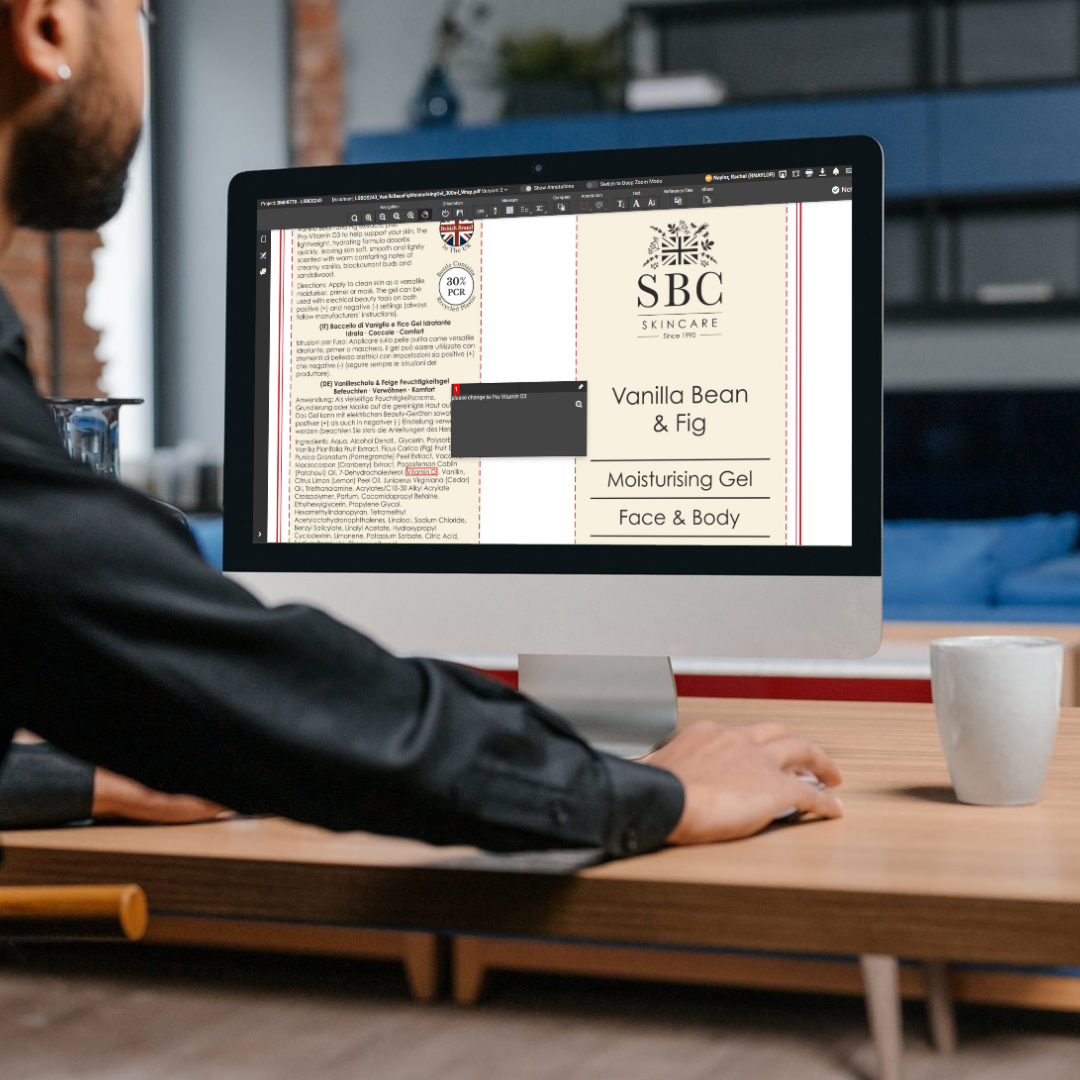
Springfield’s Digital Asset Management solution is designed to give brands complete control in an ever-changing regulatory landscape.
By centralising artwork, legal content, and packaging assets into one accessible platform, teams can quickly identify which SKUs are impacted by new regulations and implement updates with confidence.
Instead of reacting to changes manually or risking outdated information remaining in circulation, brands can proactively manage compliance, ensuring every pack in every market reflects the most current requirements.
Our global teams across Germany, the UK, Italy, Chile, and Brazil work alongside teams across the globe within one system, creating a fully connected workflow with complete visibility at every stage.
This shared environment ensures everyone is working from the latest, approved assets, reducing duplication, eliminating version confusion, and enabling faster, more accurate updates across all markets.
The Cost of Waiting: Why Action Matters
The transition to artwork compliance 2027 is not optional. Companies that delay risk:
- Product recalls due to incorrect labelling
- Fines and legal penalties
- Delayed market entry
- Brand damage from non-compliance
In contrast, early adopters gain:
- Faster adaptation to new markets
- Reduced redesign costs
- Stronger consumer trust
How Springfield Supports Future Packaging Regulation Compliance
Navigating future packaging laws requires the right infrastructure and expertise.
Springfield supports brands through:
Digital Asset Management (DAM)
- Centralised control of global artworks
- Efficient updates for legal and regulatory changes
- Scalable systems for multi-market compliance
Expert Artwork and Prepress Support
- Regulatory-ready artwork creation
- Reduced risk of costly recalls
By combining technology with regulatory expertise, Springfield helps brands stay ahead of the packaging regulation forecast, not react to it.
Get in touch with our team to remain at the forefront of growth while streamlining and future-proofing your brand.